
CPU comparison
Ryzen 9 9900X vs Ryzen 9 9950X
Compared on manufacturer specifications — cores, cache, clocks and socket — with the verdict reasoned from those specs, not from benchmarks we have not run.
Specifications verified August 29, 2026
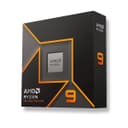
AMD
Ryzen 9 9900X
12C / 24T · 5.6 GHz · 64MB L3
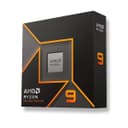
AMD
Ryzen 9 9950X
16C / 32T · 5.7 GHz · 64MB L3
Amazon UK search links are provided for current availability; no affiliate programme is currently configured, and no live price is claimed here. Affiliate disclosure.
| Specification | Ryzen 9 9900X | Ryzen 9 9950X |
|---|---|---|
| Vendor | ||
| Vendor | AMD | AMD |
| Cores | ||
| Cores | 12 | 16 |
| Threads | ||
| Threads | 24 | Winner: 32 |
| Boost clock | ||
| Boost clock | 5.6 GHz | Winner: 5.7 GHz |
| L3 cache | ||
| L3 cache | 64MB | 64MB |
| TDP / Processor Base Power | ||
| TDP / Processor Base Power | 120W (TDP) | 170W (TDP) |
| Socket | ||
| Socket | AM5 | AM5 |
| Integrated GPU | ||
| Integrated GPU | Yes | Yes |
| Memory support | ||
| Memory support | DDR5 | DDR5 |
| Released | ||
| Released | August 15, 2024 | August 15, 2024 |
| US list (MSRP / RCP) | ||
| US list (MSRP / RCP) | ~$499~£370 | ~$649~£481 |
| UK street price | ||
| UK street price | Search Amazon (opens in new tab) | Search Amazon (opens in new tab) |
AMD publishes TDP and Intel publishes Processor Base Power — related figures, but not the same unit, so no power winner is declared.
The spec-only verdict
Gaming: Ryzen 9 9950X holds the on-paper edge at 5.7 GHz against 5.6 GHz, with cache in the same class — a specification nudge, not a measured frame-rate lead.
Parallel work: Ryzen 9 9950X brings 32 threads against 24 — streaming alongside a game, compiles and heavy multitasking are what threads are for.
Upgrade path: Both sit on AM5. AMD has committed to supporting AM5 through 2029, and multiple Ryzen generations already run on it — a drop-in upgrade later is plausible.
Resilience: both include integrated graphics, so either can drive a display and be troubleshot without a discrete card installed.
Fit for use
Where each chip is positioned
Derived from cache, clocks and thread count — positioning from the spec sheet, not measured performance.
| Use case | Ryzen 9 9900X | Ryzen 9 9950X |
|---|---|---|
| Esports / 1080pLow-resolution, high-frame-rate play is CPU-bound, so cache and boost clock dominate — the reason stacked-cache X3D parts exist. | ||
| Esports / 1080pLow-resolution, high-frame-rate play is CPU-bound, so cache and boost clock dominate — the reason stacked-cache X3D parts exist. | Capable | Capable |
| 1440p / 4K gamingBoth gaming columns use the same cache-first rule (X3D or ≥96MB L3). The GPU still carries more of the load at 1440p/4K — this is not a separate boost-clock ranking. | ||
| 1440p / 4K gamingBoth gaming columns use the same cache-first rule (X3D or ≥96MB L3). The GPU still carries more of the load at 1440p/4K — this is not a separate boost-clock ranking. | Capable | Capable |
| Streaming + contentGaming while encoding, or cutting a timeline with apps open behind it, scales with how many threads you can spread across. | ||
| Streaming + contentGaming while encoding, or cutting a timeline with apps open behind it, scales with how many threads you can spread across. | Strong | Strong |
| Dev / compileBuilds, test suites and containers parallelise across threads; this is where the top of the range pays back. | ||
| Dev / compileBuilds, test suites and containers parallelise across threads; this is where the top of the range pays back. | Capable | Strong |
| Local AI companionA local model running alongside everything else needs threads to spare, and DDR5 bandwidth for whatever the GPU does not hold. | ||
| Local AI companionA local model running alongside everything else needs threads to spare, and DDR5 bandwidth for whatever the GPU does not hold. | Strong | Strong |
Common questions
Ryzen 9 9900X vs Ryzen 9 9950X
Answered from the verified figures on this page rather than general guidance.
Which is better for gaming, Ryzen 9 9900X or Ryzen 9 9950X?
Which handles streaming, compiles and multitasking better, Ryzen 9 9900X or Ryzen 9 9950X?
Which platform has the better upgrade path, AM5 or AM5?
Do Ryzen 9 9900X and Ryzen 9 9950X need a dedicated graphics card?
If one chip holds a specification lead that matches your workload — cache for gaming, threads for parallel work — that lead outweighs a step of clock speed. When the specs tie, the socket decides: the cheapest upgrade is the one that reuses the motherboard.