
Desktop CPUs
Which CPU for gaming, streaming and dev work
Every spec site ranks chips by benchmark scores. These pages do something more durable: they reason from the specifications themselves — what each chip is built for, and what each socket means for your next upgrade.
The rule everything below follows
Specs are manufacturer figures: positioning, not benchmarks
Every number on this page is a published specification — cores, threads, boost clock, cache, power, socket. You will find no frame rates or benchmark scores here, because we have not measured any. What specifications do support is positioning: stacked cache exists to feed game engines, high thread counts exist for parallel work, and the socket decides whether your next CPU is a drop-in upgrade or a new motherboard.
Fit for use
What each chip is positioned for
Derived from cache, clocks and thread count — the reasoning is underneath the table, and the thresholds are crude on purpose.
Scroll the table sideways to see every column.
| CPU | Esports / 1080p | 1440p / 4K gaming | Streaming + content | Dev / compile | Local AI companion |
|---|---|---|---|---|---|
 | Capable | Capable | Strong | Strong | Strong |
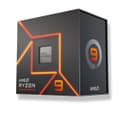 | Capable | Capable | Strong | Strong | Strong |
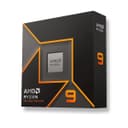 | Capable | Capable | Strong | Strong | Strong |
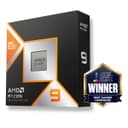 | Strong | Strong | Strong | Strong | Strong |
 | Strong | Strong | Strong | Strong | Strong |
 | Capable | Capable | Strong | Strong | Strong |
 | Capable | Capable | Strong | Capable | Strong |
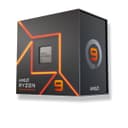 | Capable | Capable | Strong | Capable | Strong |
 | Capable | Capable | Strong | Capable | Strong |
 | Strong | Strong | Strong | Capable | Strong |
 | Capable | Capable | Strong | Capable | Strong |
| Capable | Capable | Strong | Capable | Capable |
 | Capable | Capable | Strong | Capable | Capable |
 | Capable | Capable | Capable | Capable | Capable |
 | Strong | Strong | Capable | Capable | Capable |
 | Capable | Capable | Capable | Capable | Capable |
 | Capable | Capable | Capable | Capable | Capable |
| Strong | Strong | Capable | Capable | Capable |
 | Strong | Strong | Capable | Capable | Capable |
| Capable | Capable | Stretched | Stretched | Stretched |
 | Capable | Capable | Stretched | Stretched | Stretched |
 | Capable | Capable | Stretched | Stretched | Stretched |
 | Strong | Strong | Stretched | Stretched | Stretched |
How this is derived. Gaming fit reads L3 cache and boost clock — 96MB or more of L3 means stacked 3D V-Cache, which exists precisely for games. Streaming, compile and local-AI fit read thread count, because parallel work is what threads are for.
- Esports / 1080p: Low-resolution, high-frame-rate play is CPU-bound, so cache and boost clock dominate — the reason stacked-cache X3D parts exist.
- 1440p / 4K gaming: Both gaming columns use the same cache-first rule (X3D or ≥96MB L3). The GPU still carries more of the load at 1440p/4K — this is not a separate boost-clock ranking.
- Streaming + content: Gaming while encoding, or cutting a timeline with apps open behind it, scales with how many threads you can spread across.
- Dev / compile: Builds, test suites and containers parallelise across threads; this is where the top of the range pays back.
- Local AI companion: A local model running alongside everything else needs threads to spare, and DDR5 bandwidth for whatever the GPU does not hold.
“Stretched” does not mean unusable — it marks where a chip’s spec sheet runs out of headroom first. No frame rates are claimed anywhere here, because none were measured.
Specifications
The full spec sheet
Ordered by thread count, the axis that separates a gaming-first part from a workstation-flavoured one. Every figure is the manufacturer's own.
Amazon UK search links are provided for current availability; no affiliate programme is currently configured, and no live price is claimed here. Affiliate disclosure.
Scroll the table sideways to see every column.
| CPU | Positioning | Cores | Threads | Boost | L3 cache | TDP / Processor Base Power | Socket | iGPU | Memory | US MSRP / RCP | Search UK listings |
|---|---|---|---|---|---|---|---|---|---|---|---|
| Enthusiast | 24 (8P + 16E) | 32 | 6.0 GHz | 36MB | 125W (Processor Base Power) | LGA1700 | Yes | DDR4 / DDR5 | US MSRP ~$589~£436 indicative | Search Amazon UK (opens in new tab) |
| Enthusiast | 16 | 32 | 5.7 GHz | 64MB | 170W (TDP) | AM5 | Yes | DDR5 | US MSRP ~$699~£518 indicative | Search Amazon UK (opens in new tab) |
| Enthusiast | 16 | 32 | 5.7 GHz | 64MB | 170W (TDP) | AM5 | Yes | DDR5 | US MSRP ~$649~£481 indicative | Search Amazon UK (opens in new tab) |
| Enthusiast | 16 | 32 | 5.7 GHz | 128MB | 170W (TDP) | AM5 | Yes | DDR5 | US MSRP ~$699~£518 indicative | Search Amazon UK (opens in new tab) |
| Enthusiast | 16 | 32 | 5.6 GHz | 192MB | 200W (TDP) | AM5 | Yes | DDR5 | US MSRP ~$899~£666 indicative | Search Amazon UK (opens in new tab) |
| Enthusiast | 20 (8P + 12E) | 28 | 5.6 GHz | 33MB | 125W (Processor Base Power) | LGA1700 | Yes | DDR4 / DDR5 | US MSRP ~$409~£303 indicative | Search Amazon UK (opens in new tab) |
| Enthusiast | 24 (8P + 16E) | 24 | 5.7 GHz | 36MB | 125W (Processor Base Power) | LGA1851 | Yes | DDR5 | US MSRP ~$589~£436 indicative | Search Amazon UK (opens in new tab) |
| Enthusiast | 12 | 24 | 5.6 GHz | 64MB | 170W (TDP) | AM5 | Yes | DDR5 | US MSRP ~$549~£407 indicative | Search Amazon UK (opens in new tab) |
| Enthusiast | 12 | 24 | 5.6 GHz | 64MB | 120W (TDP) | AM5 | Yes | DDR5 | US MSRP ~$499~£370 indicative | Search Amazon UK (opens in new tab) |
| Enthusiast | 12 | 24 | 5.5 GHz | 128MB | 120W (TDP) | AM5 | Yes | DDR5 | US MSRP ~$599~£444 indicative | Search Amazon UK (opens in new tab) |
| Enthusiast | 24 (8P + 16E) | 24 | 5.5 GHz | 36MB | 125W (Processor Base Power) | LGA1851 | Yes | DDR5 | US RCP ~$339~£251 indicative | Search Amazon UK (opens in new tab) |
| Performance | 20 (8P + 12E) | 20 | 5.5 GHz | 30MB | 125W (Processor Base Power) | LGA1851 | Yes | DDR5 | US MSRP ~$394~£292 indicative | Search Amazon UK (opens in new tab) |
| Performance | 14 (6P + 8E) | 20 | 5.3 GHz | 24MB | 125W (Processor Base Power) | LGA1700 | Yes | DDR4 / DDR5 | US MSRP ~$319~£236 indicative | Search Amazon UK (opens in new tab) |
| Performance | 18 (6P + 12E) | 18 | 5.3 GHz | 30MB | 125W (Processor Base Power) | LGA1851 | Yes | DDR5 | US RCP ~$219~£162 indicative | Search Amazon UK (opens in new tab) |
| Performance | 18 (6P + 12E) | 18 | 5.3 GHz | 30MB | 125W (Processor Base Power) | LGA1851 | No | DDR5 | — | Search Amazon UK (opens in new tab) |
| Performance | 8 | 16 | 5.6 GHz | 96MB | 120W (TDP) | AM5 | Yes | DDR5 | US MSRP ~$499~£370 indicative | Search Amazon UK (opens in new tab) |
| Performance | 8 | 16 | 5.5 GHz | 32MB | 65W (TDP) | AM5 | Yes | DDR5 | US MSRP ~$359~£266 indicative | Search Amazon UK (opens in new tab) |
| Performance | 8 | 16 | 5.4 GHz | 32MB | 105W (TDP) | AM5 | Yes | DDR5 | US MSRP ~$399~£296 indicative | Search Amazon UK (opens in new tab) |
| Performance | 8 | 16 | 5.2 GHz | 96MB | 120W (TDP) | AM5 | Yes | DDR5 | US MSRP ~$479~£355 indicative | Search Amazon UK (opens in new tab) |
| Performance | 8 | 16 | 5.0 GHz | 96MB | 120W (TDP) | AM5 | Yes | DDR5 | US MSRP ~$449~£333 indicative | Search Amazon UK (opens in new tab) |
| Performance | 8 | 16 | 4.5 GHz | 96MB | 120W (TDP) | AM5 | Yes | DDR5 | US MSRP ~$329~£244 indicative | Search Amazon UK (opens in new tab) |
| Performance | 14 (6P + 8E) | 14 | 5.2 GHz | 24MB | 125W (Processor Base Power) | LGA1851 | Yes | DDR5 | US MSRP ~$309~£229 indicative | Search Amazon UK (opens in new tab) |
| Mainstream | 6 | 12 | 5.4 GHz | 32MB | 65W (TDP) | AM5 | Yes | DDR5 | US MSRP ~$279~£207 indicative | Search Amazon UK (opens in new tab) |
| Mainstream | 6 | 12 | 5.3 GHz | 32MB | 105W (TDP) | AM5 | Yes | DDR5 | US MSRP ~$299~£221 indicative | Search Amazon UK (opens in new tab) |
| Mainstream | 6 | 12 | 5.2 GHz | 32MB | 65W (TDP) | AM5 | Yes | DDR5 | — | Search Amazon UK (opens in new tab) |
| Mainstream | 6 | 12 | 4.5 GHz | 96MB | 65W (TDP) | AM5 | Yes | DDR5 | US MSRP ~$269~£199 indicative | Search Amazon UK (opens in new tab) |
AMD publishes TDP; Intel publishes Processor Base Power. They are related but not the same unit, which is why no row here is declared more efficient than another. US list figures are launch MSRP or Intel RCP (Plus SKUs) — the manufacturers' own US figures, not live UK street prices. Older chips often sell below that list, and the GBP figure is an indicative conversion at a static rate, not a live price. Specifications verified September 26, 2026.
Head to head
CPU comparisons
Same-vendor tier steps, X3D against its non-X3D sibling, and the cross-vendor rivals people actually cross-shop.
Ryzen 5 9600X vs Ryzen 7 9700X
Ryzen 5 9600 vs Ryzen 5 9600X
Ryzen 7 9700X vs Ryzen 9 9900X
Ryzen 9 9900X vs Ryzen 9 9950X
Ryzen 5 7600X vs Ryzen 5 9600X
Ryzen 5 7500X3D vs Ryzen 5 7600X
Ryzen 5 7500X3D vs Ryzen 7 7800X3D
Ryzen 7 7700X3D vs Ryzen 7 7800X3D
Ryzen 7 7700X3D vs Ryzen 7 9800X3D
Ryzen 7 7800X3D vs Ryzen 7 9800X3D
Ryzen 7 9700X vs Ryzen 7 9800X3D
Ryzen 7 9800X3D vs Ryzen 7 9850X3D
Ryzen 9 9950X vs Ryzen 9 9950X3D
Ryzen 9 9950X3D vs Ryzen 9 9950X3D2 Dual Edition
Core i5-14600K vs Core i7-14700K
Core i7-14700K vs Core i9-14900K
Core Ultra 5 245K vs Core Ultra 7 265K
Core Ultra 7 265K vs Core Ultra 9 285K
Core i7-14700K vs Core Ultra 7 265K
Core i5-14600K vs Ryzen 5 9600X
Core i7-14700K vs Ryzen 7 7800X3D
Core Ultra 9 285K vs Ryzen 7 9800X3D
Core Ultra 9 285K vs Ryzen 9 9950X
Cache for games, threads for everything else
The two specifications that actually organise this market.
AMD’s X3D chips stack extra L3 cache onto the die, and game engines are what that cache feeds — which is why an 8-core X3D part is the gaming pick over higher-clocked chips with more cores. For everything parallel — streaming while you play, builds, renders, a local model in the background — thread count is the specification that answers.
Then buy the socket, not just the chip. AM5 carries two Ryzen generations already and AMD has committed to it through 2029; LGA1700 ends with 14th gen; LGA1851 hosts Core Ultra 200S and the 200S Plus refresh, and Intel’s next desktop generation is reported to move to a new LGA1954 socket. The cheapest upgrade is the one that reuses the motherboard.