
GPU comparison
GeForce RTX 5080 vs RTX 6000 Ada
Compared on the specs that decide a purchase: memory, bandwidth, power, and which workloads each card actually fits — gaming, creative, or local models when that is the job.
Specifications verified October 2, 2026. Launch MSRP is not today's price — in September 2026 the memory shortage pushed street prices 1.2×–3× above it; the notes row below carries a dated lowest UK/US price where we have one.

NVIDIA
GeForce RTX 5080
16GB VRAM · 960 GB/s
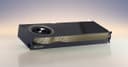
NVIDIA
RTX 6000 Ada
48GB VRAM · 960 GB/s
Amazon UK search links are provided for current availability; no affiliate programme is currently configured, and no live price is claimed here. Affiliate disclosure.
| Specification | GeForce RTX 5080 | RTX 6000 Ada |
|---|---|---|
| Vendor | ||
| Vendor | NVIDIA | NVIDIA |
| Memory | ||
| Memory | 16GB | Winner: 48GB |
| Usable for a model | ||
| Usable for a model | 16GB | Winner: 48GB |
| Bandwidth | ||
| Bandwidth | 960 GB/s | 960 GB/s |
| Segment | ||
| Segment | consumer | workstation |
| Released | ||
| Released | January 30, 2025 | Not verifiedUnverified |
| Launch MSRP | ||
| Launch MSRP | ~$999~£740 | No launch MSRP published |
| Notes | ||
| Notes | 16GB GDDR7; NVIDIA specifies 960GB/s theoretical bandwidth. Launch starting price $999 and announced availability January 30, 2025. Local-model fit is a planning estimate; model files, context, cache, backend and driver support determine actual memory use and speed. | NVIDIA specifies 48GB GDDR6 ECC, 960GB/s bandwidth and a dual-slot full-height board. Announced September 20, 2022, with distribution planned from December; the exact shipment day and a manufacturer launch MSRP are unverified here. The site's fit labels are memory estimates, not runtime or speed measurements. Compare current partner prices and the exact software stack. |
| UK street price | ||
| UK street price | Search Amazon (opens in new tab) | Search Amazon (opens in new tab) |
Local models
Estimated local-model fit
Planning estimates from published VRAM and a weights-plus-overhead heuristic. Context length, KV cache, quantization and runtime can change actual memory needs.
| Model | GeForce RTX 5080 (est.) | RTX 6000 Ada (est.) |
|---|---|---|
| Qwen 3 4B4B parameters | ||
| Qwen 3 4B4B parameters | Est. fit | Est. fit |
| Qwen 3.8 27B27B parameters | ||
| Qwen 3.8 27B27B parameters | Est. no fit | Est. fit |
| Gemma 4 31B30.7B parameters | ||
| Gemma 4 31B30.7B parameters | Est. no fit | Est. fit |
| Llama 3.1 8B Instruct8B parameters | ||
| Llama 3.1 8B Instruct8B parameters | Est. fit | Est. fit |
| Qwen 3 14B14.8B parameters | ||
| Qwen 3 14B14.8B parameters | Est. fit | Est. fit |
| Gemma 3 27B27B parameters | ||
| Gemma 3 27B27B parameters | Est. no fit | Est. fit |
| Qwen 3 30B-A3B30.5B parameters | ||
| Qwen 3 30B-A3B30.5B parameters | Est. no fit | Est. fit |
| Qwen 3 32B32.8B parameters | ||
| Qwen 3 32B32.8B parameters | Est. no fit | Est. fit |
| Llama 3.3 70B70B parameters | ||
| Llama 3.3 70B70B parameters | Est. no fit | Est. tight |
| Muse Glimmer 30B29.6B parameters | ||
| Muse Glimmer 30B29.6B parameters | Est. no fit | Est. fit |
| Mixtral 8x22B141B parameters | ||
| Mixtral 8x22B141B parameters | Est. no fit | Est. no fit |
| Qwen 3 235B-A22B235B parameters | ||
| Qwen 3 235B-A22B235B parameters | Est. no fit | Est. no fit |
| Qwen 3 Coder 480B-A35B480B parameters | ||
| Qwen 3 Coder 480B-A35B480B parameters | Est. no fit | Est. no fit |
| DeepSeek V4-Flash284B parameters | ||
| DeepSeek V4-Flash284B parameters | Est. no fit | Est. no fit |
Common questions
GeForce RTX 5080 vs RTX 6000 Ada
Answered from the verified figures on this page rather than general guidance.
Which is better for high-refresh gaming, GeForce RTX 5080 or RTX 6000 Ada?
Which has more VRAM for gaming and creative work, GeForce RTX 5080 or RTX 6000 Ada?
For local inference only — which holds larger models, GeForce RTX 5080 or RTX 6000 Ada?
For local inference only — is GeForce RTX 5080 or RTX 6000 Ada faster at generating tokens?
For local inference only — can either run a 70B model?
If one card holds a model the other cannot, that capacity difference usually outweighs a bandwidth advantage. A model that spills to system memory can be substantially slower, but the actual impact depends on the backend, transfer path, context, and workload.